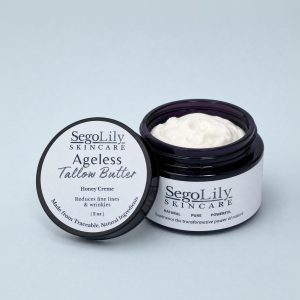
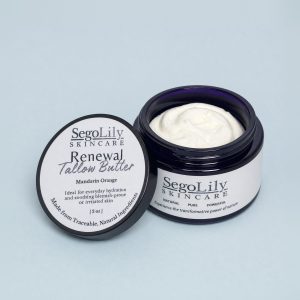
I made my tallow for faces. Then people started telling me they were using it on their feet.
Enough of them, and with enough detail, that I stopped treating it as a curiosity. Cracked heels are now one of the most common things customers write to me about, and they were nowhere in my plan.
So here’s what I’ve learned from those messages. What I’d actually tell you to do, and the point where I’d send you to a doctor instead of selling you a jar.
Why Do Heels Crack in the First Place?
Heel skin is some of the thickest on your body, and the soles of your feet have no oil glands at all. It gets its softness from water, and it holds that water badly.
Then you stand on it all day. The fat pad under your heel spreads out under your weight. The skin at the edge gets pushed outward, and thick dry skin splits rather than stretches.
That’s why a heel cracks and a forearm doesn’t. It’s a dryness problem made worse by pressure, which is worth knowing, because it tells you what a fat can and can’t do.
What a Fat Can Do for a Split Heel
It works on one mechanism. A rich fat slows how fast water leaves the skin. That’s it. It’s called occlusion, it isn’t exciting, and it’s real.
Tallow is good at it because it’s dense. It stays put. A thin lotion soaks in, feels nice for an hour, and is gone. I render every batch myself, and that thickness is the point, which I get into over at the ranch.
Here’s what it won’t do. It won’t treat a medical condition and it won’t fix the pressure that split the skin. It’s also no substitute for seeing someone if your feet are in real trouble. More on that at the end.
Please get these looked at
Deep cracks that bleed, any sign of infection, numbness or reduced feeling in your feet, or diabetes. Foot problems in diabetes are genuinely serious and aren’t a job for a jar of anything. Please get them looked at.
The Heel Routine I Give People
It’s what the customers who write to me about their heels are doing. My own jar goes on heel to forehead every morning.
Soak
Fifteen minutes in warm water
Softens the thick skin so the fat has somewhere to go. Skip this and you're greasing a callus.
Dry and file
Gently, and only if there's buildup
A pumice or foot file on damp skin. Take a little off, not a lot. You're not trying to remove the callus in one night.
Slather
More than you'd use on your face
Heels are the one place I tell people to be generous. This is the opposite of my usual advice.
Socks
Straight over the top, then bed
Keeps it on your feet instead of your sheets, and holds the warmth in while it works.
Do it at night. Every night at first, then a few times a week once things settle down.
That’s the whole of how to soften cracked heels, as far as I know it. A soak, a light file, a generous layer, and socks.
The soak is the part people skip, and it’s the part that matters most. Dry thickened skin won’t take anything in. Fifteen minutes in warm water changes what the fat can do.
How Long Does It Take?
It takes a few weeks.
Most people tell me they notice their heels feel smoother within the first week or two of doing it nightly. The rough patches take longer, because you’re waiting on new skin rather than repairing the old.
If you’ve been walking around on split heels all winter, give it a month of consistent nights before you judge it. Then keep going at a lower frequency, because the pressure that caused it hasn’t gone anywhere.

Which Jar, and Be Generous With It
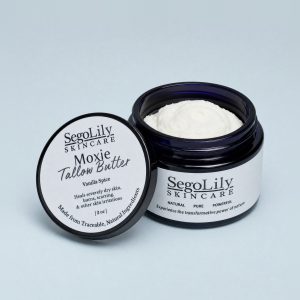
Anything you put on your feet has to be thick enough to stay put. For heels that means Moxie. It’s the richest thing I make, with babassu and perilla seed oil in it, and cracked heels are exactly what it’s for. It’s the same jar I hand anyone with dry cracked hands. It comes in Vanilla Spice and Eucalyptus.
If your heels are only rough rather than actually split, the jar you already use on your face will do. You’ll need less of it than you think.
Feet are the exception to everything else I say about quantity. On your face, a pea-sized amount is plenty and almost everyone uses far too much. On heels, use more than feels reasonable. Thick skin under pressure needs a real layer, not a smear.
A 2 oz jar will last a long time even so, because you’re only doing this at night.
What Will Undo It
Three things undo it more than anything else, and I hear about all of them constantly.
- Stopping the moment it looks better. The pressure is still there, so the skin thickens again. Drop to twice a week rather than stopping.
- Barefoot on hard floors, or open-backed shoes all summer. Both let the heel pad spread and split. Shoes with a closed back help more than any balm.
- Very hot showers. They feel wonderful on cold feet and they strip the skin you’re trying to keep soft.
None of that is exciting advice, it’s just what holds the result.
When It Isn’t a Skin Problem
I’d rather say this plainly than have you spend money on the wrong thing.
Persistently cracked heels can come with thyroid problems, diabetes, eczema and psoriasis, and fungal infection. A cosmetic fat doesn’t touch any of those. If your heels crack no matter what you do, that’s a doctor conversation and not a skincare one. Same if they crack alongside anything else that’s new.
That’s the same reason I tell people with a diagnosed skin condition to check with their dermatologist before adding anything, including mine. The American Academy of Dermatology has a straightforward guide worth reading if you want a second view.
If You Want to Try It
Start with one jar and the routine above, and give it a month of nights before you decide anything.
I didn’t build this for feet. My customers found this one on their own. If you’re curious why the same jar works on a face and a heel, that’s the texture story. You can see the full range and pick whichever scent you’d rather have on your pillowcase.
Not sure which jar is yours?
Answer a few questions about your skin and I'll point you at the right one.