Regenerative tallow starts a long way from a jar. I can walk you out to two pastures on this place, and inside a hundred yards you’d know which one the cattle grazed right. The soil tells on us. It’s spongy and dark where it’s alive, packed hard and pale where it isn’t.
That difference is what regenerative grazing means here, and it is the whole claim behind regenerative tallow. It’s a specific way of moving cattle that either builds soil or wears it down, and you can watch which one is happening on any given day. What I claim once that fat is rendered and sitting in a jar is a separate question, with a much thinner trail of evidence behind it. So let me stick to the part I can walk you out and point at.
What Is Regenerative Tallow, Exactly?
It’s tallow from cattle managed so the soil underneath them improves, and the management is almost entirely about timing.
Left on one piece of soil too long, cattle graze the way any animal does. They eat their favorites first. Then they keep coming back to the regrowth on those same plants, because it’s the easiest bite available. The plant never gets a chance to rebuild its root reserves before it’s bitten again. Eventually it gives up, and what’s left standing is whatever the cattle didn’t want. That’s how a pasture goes thin, and it happens over seasons rather than in one bad year.

Moving them changes the pattern. They hit a stretch hard, then leave it alone long enough to recover and go to seed. That’s roughly what bison did across the plains before anyone managed anything. The grass comes back deeper, the roots go further down, and the soil holds more water each year.
The plain version
Graze it, then leave it alone long enough to actually recover. Most of regenerative grazing is the leaving alone, and that’s the part that costs you fencing and attention. I can tell you what that attention looks like in 2026: this summer we collared 210 head on my family’s ranch with virtual collars. The herd now moves when I redraw a line on my phone.
Does Regenerative Grazing Change the Fat?
Here’s where I’ll be straight with you, because this is the claim the internet makes carelessly.
What’s established is that an animal’s diet and stress load change the composition of its fat. That isn’t controversial, and it’s why grass-finished and grain-finished tallow are different products with different fatty acid profiles.
What nobody has measured is whether regeneratively grazed cattle give different tallow from grass-finished cattle on a conventionally managed pasture. That study has not been run. I’d like to read it if someone does it.
My position is that the difference is real at the diet level and unproven at the grazing-system level. I run it this way for what it does to the soil. I’d rather say that than sell a claim I can’t back.
Why I Do It Anyway
Because the soil is the part I’ll hand to somebody after me.
Healthy soil, healthy plants, healthy animals, healthy people, and you can’t join that halfway down. If the soil is thin the grass is thin, and the cattle eat worse, and the fat comes off different whatever anyone measured. That chain is the argument, and the middle of it is better documented than the end of it. If you want the grazing side from people who are not selling you a jar, there is peer-reviewed work on regenerative practice in pasture-based beef.
There’s also a practical reason. Cattle on deep grass are calmer and in better condition, and I can see that without a study.
What Regenerative Skincare Should Mean on a Label
Very little, at the moment, which is worth knowing before you pay for the word.
Nobody regulates it. A brand can print regenerative tallow on a jar with no obligation to say whose soil it was, or what the management involved. Most tallow brands buy in already-rendered fat. They genuinely could not tell you.
So treat it like every other unregulated word and ask the follow-up. Whose cattle, what does the management involve, and has anyone from the company stood on that soil? Those get answered quickly by people who know and vaguely by people who don’t.
Where This Leaves You
The part of this with evidence behind it is grass-finished versus grain-finished. I wrote that up properly in what the finishing actually changes.
The fuller picture of how the fat gets into a jar is in is beef tallow good for your skin.
And if you want the soil itself, it’s a stretch of the Yellowstone Valley near Pompeys Pillar, and the cattle are on it right now.
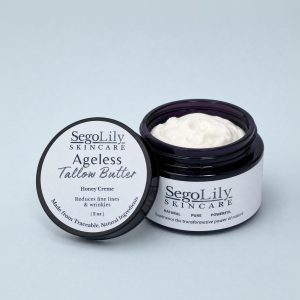
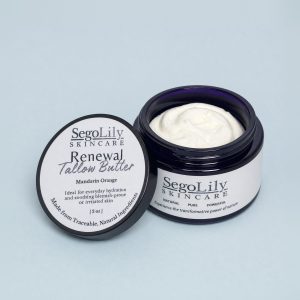
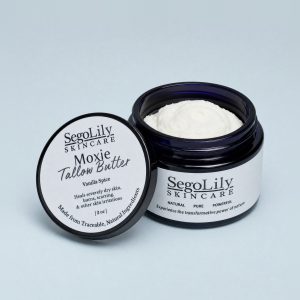
If regenerative tallow is the reason you’re here, the honest way to judge it is on your own skin rather than on my word. Every jar in the full range comes off cattle grazed this way, so pick on your skin and your nose, then give it a month of mornings.
Same soil, six products
Every jar starts as kidney suet off cattle grazed this way, rendered low and slow in a ranch kitchen. Pick on your skin and your nose.