Almost every tallow on the shelf says grass fed. Almost none of them say grass finished, and that gap is deliberate.
I’m a rancher before I’m a skincare maker, so this is the part I actually know something about. This post is the plain explanation: what grass fed beef tallow is, what grass finished adds, and what changes in the fat. If you already know the words and you’re picking a jar for your skin, I wrote how to choose a grass-fed tallow for skin for that.
The label tells you what the animal ate. It usually doesn’t tell you what it ate last, and last is what ends up in the jar.
Grass fed vs grass finished tallow is a real difference you can see in the pan.
What Is Grass Fed Beef Tallow?
Grass fed beef tallow is beef fat from cattle that ate grass, rendered. Rendering means melting the raw fat down slowly and straining it until it’s clean and keeps on a shelf. “Grass fed” describes the animal’s diet, and most labels don’t say what it ate in its last months, when most of the fat goes on.
Here’s the catch, and it’s a legal one rather than a sneaky one. Nearly every beef animal in the country is grass fed for most of its life. Calves are on grass. Yearlings are on grass. That’s just how cattle are raised.
So “grass fed” on a label can be completely true and still tell you almost nothing, because it describes a period that ended before the part that matters.
Grass Fed vs Grass Finished Tallow
Finishing is the last few months before harvest, and it’s when the animal puts on most of its fat.
That’s the whole point. The fat you render is laid down mostly at the end. So the diet at the end is the diet that made your jar, whatever the animal ate the year before.
Grass finished means it stayed on grass right through. Grain finished means it moved to a feedlot for those last months, usually on corn, because grain puts weight on faster and cheaper.
Both can honestly be called grass fed. Only one of them is grass finished. When a label says grass fed and stops there, that silence is usually the answer.
What Grass-Fed Tallow Is Used For
Most of it goes in a pan. Grass-fed tallow is a cooking fat first, because it handles high heat and keeps well. That’s why a search for it turns up as many kitchen jars as skincare.
For skin, the fat that matters is suet, the hard fat from around the kidneys. It’s the fat I use, and there’s more on why under rendering below. If you’re weighing it against plant butters, I put tallow next to shea butter and coconut oil for dry skin.
Does Grain Finishing Change Tallow?
Does grain finishing change tallow? Plainly, yes, and you don’t need a lab to see it.
Grain-finished fat renders paler and softer, and it’s more uniform batch to batch. Grass-finished fat renders a deeper, warmer color, sets firmer, and shifts a little through the year with how the grass came in.
The color is carotenoids from green forage carrying into the fat. The firmness comes from a different fatty acid balance. Grain pushes that balance one way, grass keeps it another.
I render both from time to time when I’m testing, and I can tell them apart before I smell them.

There’s a nutrient side too, and I’ll put it carefully. Grass-finished fat generally carries more of the fat-soluble vitamins, because those come from what the animal ate rather than from anything I add. That’s a difference in the raw material. I’m not going to turn it into a promise about your face.
What Is Regenerative Beef Tallow?
One more step past grass finished, and the one I care most about.
Grass finished tells you what the animal ate. Regenerative tells you what the grazing did to the soil underneath it.
On a regenerative operation the cattle get moved on purpose, and the moving is the whole point. They’re kept in a tight group, given a specific piece of soil for a short and specific time, then taken off it. Out here you ideally don’t bring them back onto that acreage for over a year.
It copies what bison did to the plains: hit a stretch hard, then leave it completely alone long enough to recover and go to seed. The alternative is what most people picture as gentler, cattle loose in a big pasture for months, and it isn’t. They eat the plants they like over and over all season until those are gone and only the ones they won’t touch are left.
So the grass comes back deeper. The soil holds more water through the dry stretch of August. Birds turn up that weren’t nesting there before.
My suet comes off the B Bar Ranch in the Tom Miner Basin, which is run that way. It’s a USDA certified organic ranch and has been since 1993, which is longer than most of the brands using the word have existed. The soil-health work behind managed grazing is well documented if you’d rather not take my word for it.
So what is regenerative beef tallow in practice? It’s grass finished, plus grazing that builds the soil the animal is standing on. And I’d rather talk about that in outcomes than in dirt, because the order runs healthy soil, healthy plants, healthy animals, healthy people, and you can’t join it halfway down.
Here’s the honest part. Diet changes an animal’s fat, that’s established, and it’s why grass finishing raises the fat-soluble vitamins. Stress changes an animal too. What nobody has measured, as far as I can find, is whether a regeneratively grazed animal gives a measurably different tallow than a conventionally grass-finished one.
So I won’t hand you a number. What I’ll say is that the logic doesn’t stop halfway: better soil grows better plants, better plants and less stress make a healthier animal, and the fat comes off the animal. I’d find it strange if all of that were true and none of it reached the jar. Weigh that as one rancher’s opinion, because that’s what it is.
Does the Rendering Method Matter?
Sourcing is only half of it. What happens after matters just as much, and this is where most brands quietly lose.
Most tallow companies don’t render their own. They buy it already rendered, which means two decisions were made for them.
Which fat. Suet is the hard fat from around the kidneys and it’s the most nutrient-dense on the animal. I call it the extra virgin of tallow. Trim fat comes off the outside of the cuts, it’s cooking fat, and it carries a much stronger beefy smell. I use kidney suet, always.
How it was cooked. Low and slow keeps it clean. Hot and fast is quicker and you can smell the difference for months afterwards. It’s why some dermatologists say tallow smells bad, and about a jar made that way, they’re right.
You can start with the best grass-finished suet in the country and ruin it in an afternoon. The reverse is also true: careful rendering can’t rescue fat from an animal that lived badly.
How to Read a Label
Four questions, and you can usually answer them from a website in about a minute.
- Does it say grass finished, or only grass fed? If it stops at grass fed, assume grain finished.
- Do they say which fat? Suet or trim. Vagueness here usually means trim.
- Do they render it themselves? If they can tell you the temperature and the hours, they do.
- Can they name the ranch? Not the region. The ranch.
- Grass fed and finished on a label means grass right through, the finishing months included, and it’s the label to look for.
None of that is a trick. It’s just the set of things a company knows about its own product if it actually made it. When you’re ready to pick one for your skin, here’s what I check.
Why I Bother
Because it’s the only part of this I can control completely.
I can’t promise you what your skin will do. Nobody honestly can. What I can tell you is exactly which animal, which fat, which ranch, and how long it sat on low heat in my kitchen. And if your question is more basic than sourcing, start with is beef tallow good for your skin.
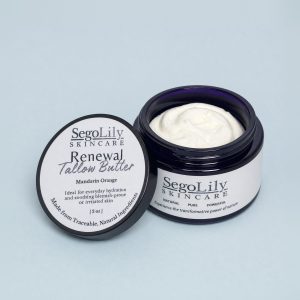
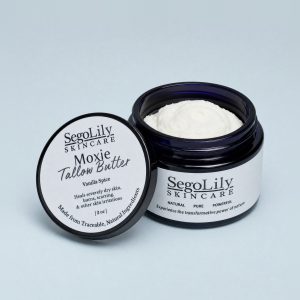
If you want to see where the grass-finished suet comes from and how a batch comes together, it’s over at the ranch. And if you want to try the result, the full range is there, a short list in every jar.
If this is the standard you want
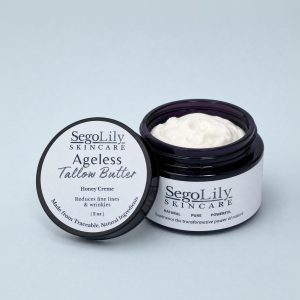
The suet behind every jar is the same, grass-finished off a ranch that holds organic certification, and I render it slow in my own kitchen. Ageless is where most people start.